Hey there! I’m a supplier of Pyrite Ore – Non – ferrous Metal Roasted Furnace Charge. You might be wondering what goes on inside that furnace when we roast pyrite ore. Well, let’s dive right into the chemical reactions that take place during this process. Pyrite Ore- Non-ferrous Metal Roasted Furnace Charge
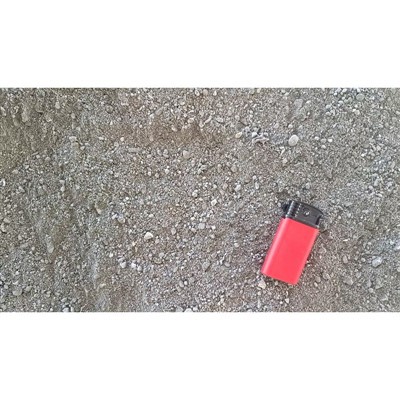
The Basics of Pyrite Ore
First off, pyrite ore, also known as fool’s gold, has the chemical formula FeS₂. It’s a pretty common mineral out there. When we put it into the non – ferrous metal roasted furnace charge, we’re looking to transform it. And that transformation is all about chemical reactions.
Initial Oxidation Reactions
The moment pyrite ore hits the high – temperature environment of the furnace, the oxidation process starts. One of the main reactions is the oxidation of pyrite by oxygen in the air. The chemical equation for this is:
4FeS₂(s) + 11O₂(g) → 2Fe₂O₃(s) + 8SO₂(g)
This is a major reaction. You can think of it like this: the pyrite ore (FeS₂) is reacting with oxygen (O₂) from the air. The result is the formation of iron(III) oxide (Fe₂O₃) in a solid state and sulfur dioxide (SO₂) in a gas state. This reaction is exothermic, which means it releases heat. And that heat is super important because it helps to keep the furnace at a high enough temperature for other reactions to happen.
The sulfur dioxide gas that’s produced is actually a key by – product. In our industry, we can use it to make sulfuric acid. That’s a valuable industrial chemical used in all sorts of things, like fertilizer production and metal processing.
Intermediate Reactions
As the roasting continues, there are some intermediate reactions. For example, there might be partial oxidation of pyrite to form iron(II) sulfide and sulfur dioxide. The equation for this is:
2FeS₂(s) + 3O₂(g) → 2FeS(s) + 2SO₂(g)
This reaction can occur under conditions where there’s not enough oxygen or at lower temperatures within the furnace. The iron(II) sulfide (FeS) that’s formed can then react further. It can react with more oxygen to form iron(III) oxide and sulfur dioxide, just like in the initial oxidation reaction we talked about earlier.
Role of Other Elements in the Furnace Charge
Now, in our non – ferrous metal roasted furnace charge, pyrite isn’t the only thing. There are often other non – ferrous metals and minerals present. For example, if there’s some copper minerals in the mix, they can also go through reactions during the roasting process.
Let’s say there’s chalcopyrite (CuFeS₂) in the furnace charge. When it’s roasted, it can react with oxygen in a similar way to pyrite. The reaction is:
2CuFeS₂(s) + 4O₂(g) → Cu₂S(s) + 2FeO(s) + 3SO₂(g)
Here, chalcopyrite reacts with oxygen to form copper(I) sulfide (Cu₂S), iron(II) oxide (FeO), and sulfur dioxide. The formation of copper(I) sulfide is an important step because it can then be further processed to extract pure copper.
Impact of Roasting Conditions
The conditions in the furnace, like temperature and oxygen concentration, have a huge impact on these chemical reactions. If the temperature is too low, the reactions might not happen as quickly or completely. For example, if the temperature isn’t high enough for the oxidation of pyrite to iron(III) oxide, we might end up with more iron(II) sulfide instead.
On the other hand, if there’s too much oxygen, we might get more complete oxidation, but it could also lead to the formation of other unwanted compounds. So, we have to carefully control these conditions to get the best results.
Recovery of Metals and By – products
After the roasting process, we have a mixture of solid products. We can use various methods to separate and recover the valuable metals. For the iron(III) oxide, it can be used in the production of iron and steel. The copper(I) sulfide can be smelted to get pure copper.
And let’s not forget about the sulfur dioxide. As I mentioned earlier, it can be used to make sulfuric acid. We have systems in place to capture and convert the sulfur dioxide into this useful chemical.
Why Our Pyrite Ore – Non – ferrous Metal Roasted Furnace Charge is Great
So, why should you choose our pyrite ore – non – ferrous metal roasted furnace charge? Well, our ore is of high quality. It has the right composition of pyrite and other non – ferrous minerals, which means you’ll get good yields of valuable metals and by – products during the roasting process.
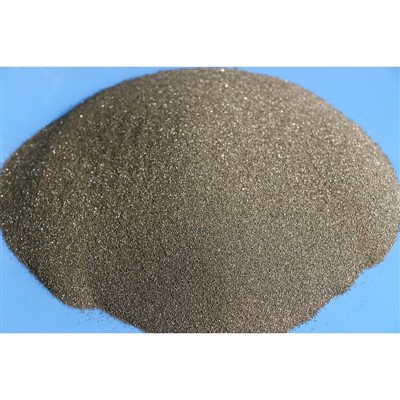
We also have a lot of experience in this field. We know how to control the roasting conditions to ensure that the chemical reactions happen just right. This means you’ll get consistent results every time you use our product.
Let’s Talk Business
Inorganic Chemicals- Pyrite-related Products If you’re in the market for pyrite ore – non – ferrous metal roasted furnace charge, I’d love to have a chat with you. Whether you’re a small – scale operation or a large industrial company, we can provide you with the right product for your needs. Contact us to start a discussion about your requirements and how we can work together to make your roasting process more efficient and profitable.
References
- "Inorganic Chemistry" by Gary L. Miessler, Paul J. Fischer, and Donald A. Tarr.
- "Metallurgical Thermodynamics" by A. K. Biswas and W. G. Davenport.
Yunfu Fuliu Mineral Materials Co., Ltd.
We are one of the most reliable pyrite ore- non-ferrous metal roasted furnace charge suppliers in China, specialized in providing high quality customized products. Welcome to wholesale bulk pyrite ore- non-ferrous metal roasted furnace charge in stock here from our factory. If you have any enquiry about free sample, please feel free to email us.
Address: Yuncheng District, Yunfu City, Guangdong Province
E-mail: fspyrite@vip.126.com
WebSite: https://www.fuliupyrite.com/
